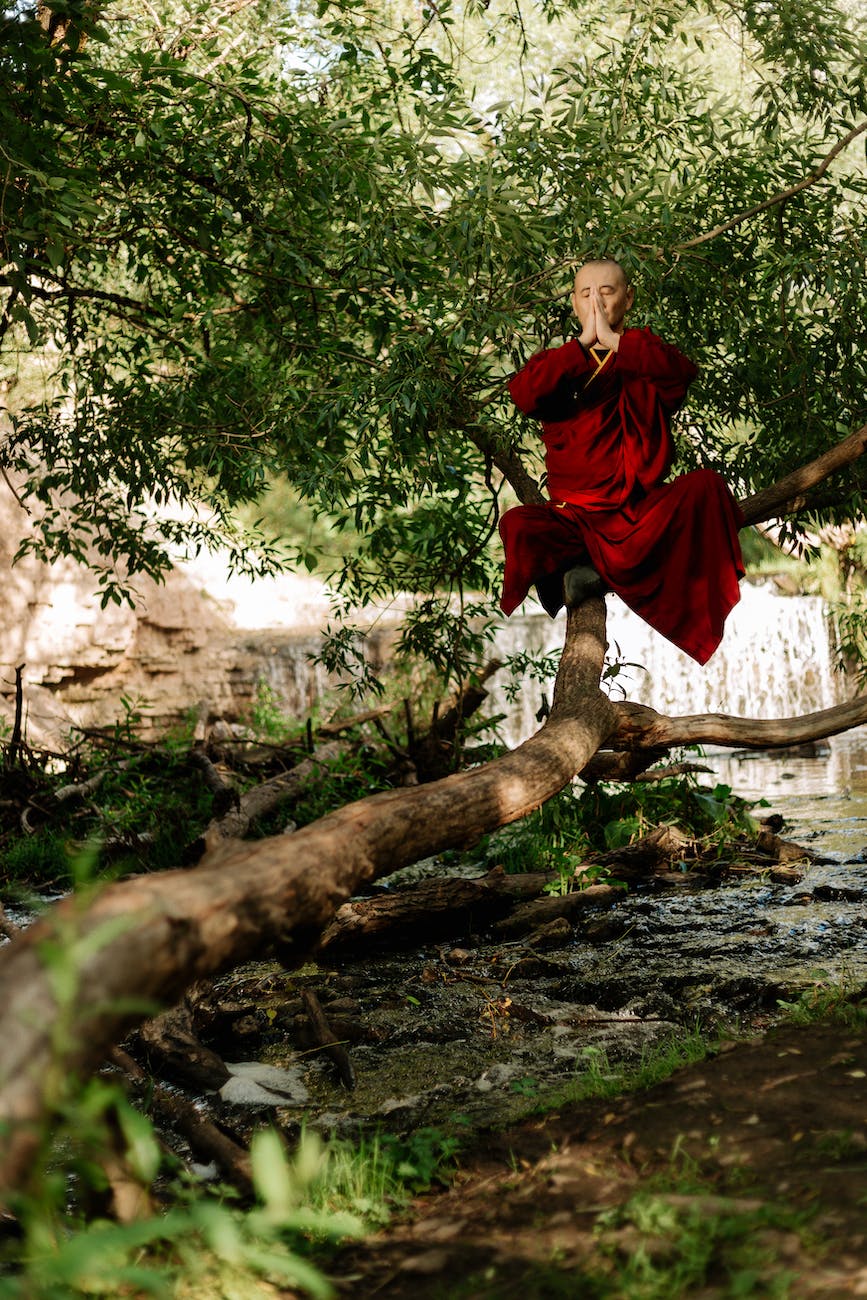
We are the peace. We are the joy. Joy creates the Being and the Being creates the joy.
From dastardly to noble
Now we see that meditation conquers depression, anxiety, lack of sleep, and reduces pain It wasn’t always this way. In the 1950’s and ’60’s those that even knew about meditation lumped it into the category of crackpot religions at best, and mind-control at worst. Thought to be a quirky, airy-fairy system, it was met with fear and suspicion. Those that didn’t dismiss it as a joke, considered it a form of mind control, where outside forces controlled the individual’s mind and robbed them of free-will.
It turns out that the mind is controlled by outside forces, but those forces are the habitual fears and anxieties we’ve acquired. Meditation gives the individual control of their own mind and takes it out of the habits of habitual thought. Heh, in a way it is mind-control. Instead of reacting from a base that no longer serves you, meditation creates the space and freedom to drop the negativity and choose to focus on bringing positivity to your life. You control the mind. The mind does not control you.
As society has learned to embrace meditation, we’ve learned that it’s good to have a still mind. The calm mind makes better choices and releases healthy hormones to the body, creating a self-perpetuating peace, and a sense of well-being.
Deep meditation
The daily practice of sitting quietly for a few minutes provides the moment to view our thoughts, and eventually realize that we are not the thoughts. We choose our thoughts and can change them at any time. Other forms of meditation can also make a difference in day-to-day living.
Harvard.edu has listed these types to get you started
- Concentration teaches you how to focus your mind. It’s the foundation for other forms of meditation.
- Heart-centered meditation involves quieting the mind and bringing awareness to the heart, an energy center (chakra) in the middle of the chest.
- Mindfulness meditation encourages you to focus objectively on negative thoughts as they move through your mind, so you can achieve a state of calm. Tai chi and qigong (chi-gong) are moving forms of meditation that combine physical exercise with breathing and focus. Teaching the practitioner to yoke and direct concentration with energy flow.
- Transcendental Meditation is a well-known technique in which you repeat a mantra—a word, phrase, or sound—to quiet your thoughts and achieve greater awareness. Focusing on one thing, a word, or a sound teaches the mind singularity, slows the thinking process, and helps one to sit in silence.
- Walking meditation turns your focus to both body and mind as you breathe in time with your footsteps. Like tai chi, qigong, and yoga, it provides a way to observe the connection between the menta, spiritual, and physical.
Once we understand the connection between mind, body, and spirit, we can go even deeper into mediation, creating a deep sense of peace and calm in our bodies. One of the keys to deep meditation is quieting the mind. That seems contradictory to our busy, hectic go, go, go western culture. The idea of always thinking, always planning, always doing is ingrained in us so deeply that we find it difficult to embrace the silent stillness of meditation and just let go and be. Because after all, what are we if we are not doing something? The thing is, meditation provides the space to create a yes, busy, but mindful day.
Namaste
Obimaya Meditative is here to assist with all things meditative. Utilizing over 30 years of meditation practice and study, the hope is to aid, assist, and inform those interested in the practice of meditation and the search for inner peace. Enjoy.

 Obimaya Meditative
Leave a comment